Mental Stimulation Games for Dogs: 12 Brain Games You Can Set Up Today
Quick answer
Mental stimulation gives a dog problems to solve, such as sniffing out food, working a puzzle, or learning a new word. Short 5 to 10 minute sessions of games like find it, snuffle mats, the shell game, nose work, and name the toy can be set up with household items. Start easy, use part of the daily food, and supervise every game.
Mental stimulation means giving a dog problems to solve: finding food by scent, figuring out a puzzle, learning a new word, or making choices. Many owners find that 10 to 15 minutes of brain work leaves a dog noticeably more settled, and these games are especially useful on rainy days, for dogs on activity limits set by a veterinarian, and for young, high-energy dogs. All of the games below use rewards, not corrections, which is in line with the American Veterinary Society of Animal Behavior's recommendation that dog training be reward-based.
Quick reference: 12 games at a glance
| Game | Difficulty | Setup time | What you need | Best for |
|---|---|---|---|---|
| Find it (treat scatter) | Easy | 1 min | Small treats | Beginners, any age |
| Snuffle mat | Easy | 1 min | Snuffle mat or rolled towel | Fast eaters, older dogs |
| Muffin tin puzzle | Easy | 2 min | Muffin tin, tennis balls, treats | First puzzle game |
| Puzzle feeders | Easy to hard | 2 min | Store-bought puzzle toy | Daily meals |
| Box and paper shred | Easy | 3 min | Cardboard boxes, paper | Dogs who like to tear |
| Hide and seek (people) | Easy to medium | None | A helper or a stay cue | Building recall |
| Shell game | Medium | 2 min | Three cups, treats | Focus and scenting |
| Nose work (room search) | Medium | 5 min | Treats or a scented toy | High-energy dogs |
| Name the toy | Medium to hard | None | Two or more toys | Dogs who love toys |
| Learn a new trick | Medium | None | Treats, clicker optional | Any dog |
| Which hand? | Easy | None | One treat | Quick daily game |
| Mini obstacle course | Medium | 10 min | Cushions, broom, chairs | Body awareness |
Before you start
- Use part of the daily food. If you use a lot of treats, take that amount out of meals so the dog does not gain weight. Many games work with plain kibble.
- Keep sessions short. Five to ten minutes is plenty. Stop while the dog is still keen.
- Make it easy first. A dog that fails over and over will quit. Start with versions the dog can win, then add difficulty.
- Supervise. Pick up cardboard, paper, and toys after the game so nothing gets swallowed. Choose puzzle toys sized for your dog.
- Separate dogs. In multi-dog homes, play food games one dog at a time or in separate rooms to avoid squabbles over food.
Easy games
1. Find it (treat scatter)
Say "find it" and toss a few treats on the floor in front of your dog. Once the dog understands the phrase, scatter treats across a larger area, then in grass outside. Sniffing for scattered food is simple, calming, and works for puppies and senior dogs alike.
2. Snuffle mat
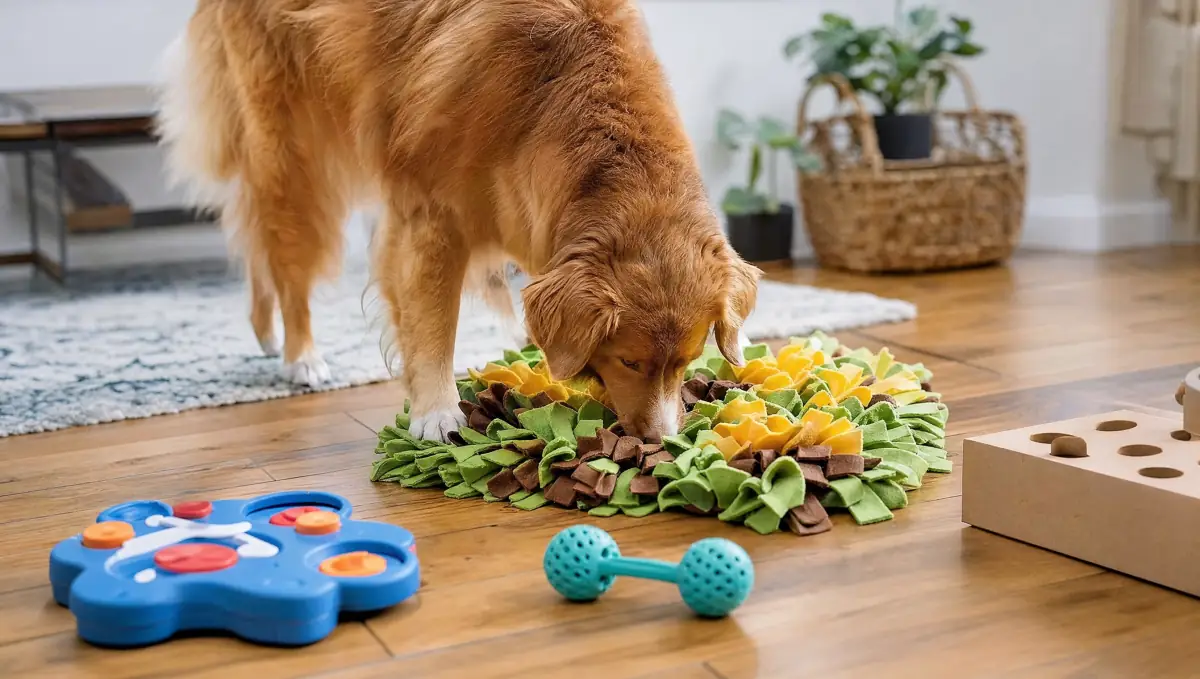
A snuffle mat is a mat with fabric strips that hide pieces of kibble. Sprinkle food in and let the dog root it out. If you do not have one, roll treats loosely inside a towel and let the dog unroll it.
3. Muffin tin puzzle
Put a treat in a few cups of a muffin tin and cover every cup with a tennis ball. The dog has to move balls to find the food. Start with no balls on top so the dog learns the tin holds food, then add balls a few at a time.
4. Puzzle feeders
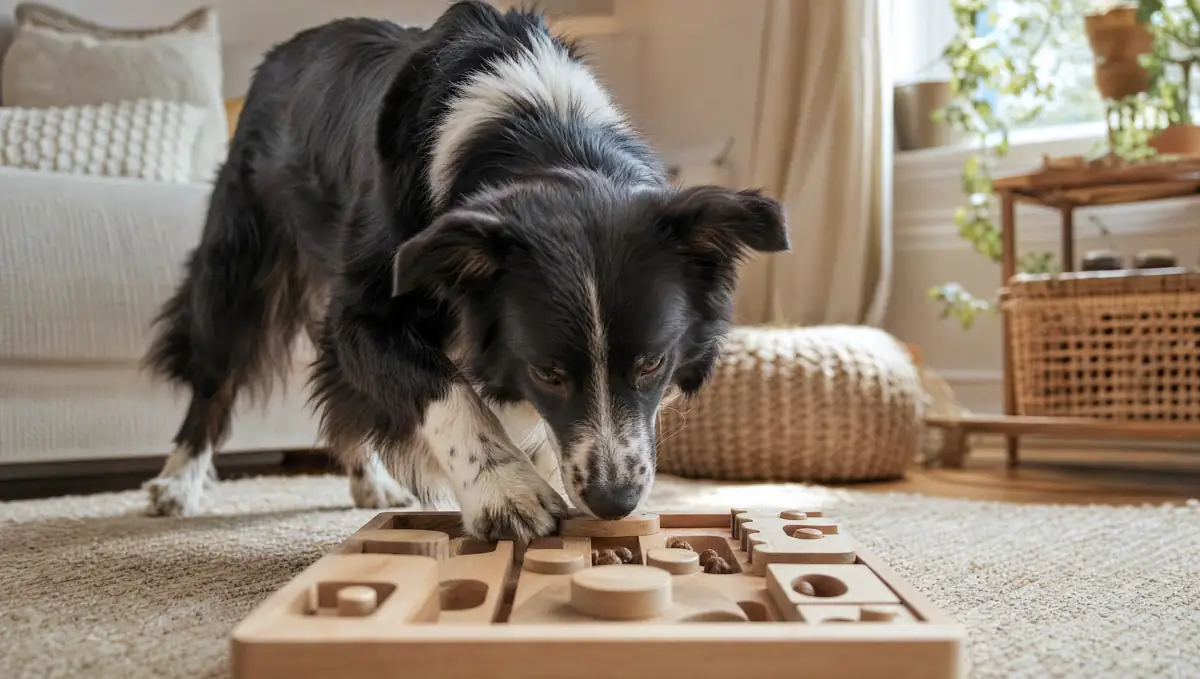
Commercial puzzle feeders range from simple wobble toys that drop kibble as they roll to multi-step boards with sliders and lids. Start with the simplest level and move up only when your dog solves it quickly. Feeding one meal a day from a puzzle is an easy way to add brain work without extra time.
5. Box and paper shred
Put a few treats in a cardboard box, add loosely crumpled paper, and close the flaps loosely. For more challenge, put smaller boxes inside a bigger one. This suits dogs who like to dig and tear, as long as they rip the box rather than eat it.
6. Which hand?
Hold a treat in one closed fist and show both fists. When the dog sniffs or paws the correct hand, open it and let the dog have the treat. If the dog picks wrong, show the empty hand and try again. It takes seconds and is a good filler game.
Medium games
7. Hide and seek with people
Have a helper hold your dog, or ask for a stay, while you hide in another room. Call the dog once and celebrate with treats or play when it finds you. Start with easy hiding spots in plain view, then move to behind doors and furniture. This game also strengthens coming when called.
8. Shell game
Place three identical cups upside down. Let your dog watch you put a treat under one, then slowly slide the cups around. Reward the dog when it noses or paws the right cup. Start with one cup only, then two, then three. Use cups heavy enough not to tip easily, or plastic cups the dog cannot break.
9. Nose work room search
Nose work builds on the dog's strongest sense. Have the dog wait out of the room while you hide treats at nose height in easy spots: behind a chair leg, under the edge of a rug. Release the dog with "find it." As the dog improves, hide treats higher, inside boxes, or in a second room. Some owners later progress to searching for a specific target scent, which is the basis of the sport of scent work. If that interests you, a local reward-based scent-work class can show you how to introduce target odors safely.
10. Learn a new trick
Learning anything new takes focus. Good starter tricks include spin, touch (nose to your palm), paw, and go to your mat. Use lure-and-reward or a clicker: mark the moment the dog does the right thing, then reward. Keep each session to a few minutes and work on one trick at a time.
11. Mini obstacle course
Lay a broom across two low stacks of books for a jump, line up cushions to walk across, and set up two chairs to weave through. Lure your dog through each piece slowly at first. Keep jumps very low, and skip jumping for young puppies and for dogs with joint issues; ask your veterinarian if unsure.
Harder games
12. Name the toy
Some dogs can learn names for their toys. Start with one toy: say its name ("ball") as you hand it over and play. After many repetitions, put it on the floor and ask "get ball," rewarding when the dog picks it up. Then add a second, very different toy ("rope"). Put both down and ask for one. Reward correct picks and calmly reset after wrong ones. Add new toys slowly, one at a time. Not every dog will learn a long list, and that is fine; the practice itself is good brain work.
Bonus ideas for variety
- Frozen food toys: Stuff a rubber food toy with wet food or soaked kibble and freeze it for a longer-lasting challenge.
- Sniff walks: Let the dog choose the route and take its time sniffing. A slow, sniffy walk can be as tiring as a fast one.
- Tidy up: Teach the dog to drop toys into a basket, one at a time, for a reward.
Building a simple weekly routine
Variety keeps games interesting. A sample week might look like this:
| Day | Morning | Evening |
|---|---|---|
| Monday | Breakfast in puzzle feeder | 5 minutes of a new trick |
| Tuesday | Snuffle mat breakfast | Hide and seek |
| Wednesday | Sniff walk | Shell game |
| Thursday | Muffin tin puzzle | Nose work room search |
| Friday | Frozen food toy | Name the toy practice |
| Saturday | Longer sniff walk | Mini obstacle course |
| Sunday | Box shred | Rest or easy find it |
Adjust to your dog. Some dogs need more, others are content with one game a day. Rest days matter too.
Signs a game is too hard or too much
- Barking at the puzzle, chewing it out of frustration, or walking away
- Pawing at you repeatedly instead of trying
- Becoming more wound up rather than calmer afterward
If you see these, make the game easier, shorten it, or switch to a calmer sniffing game. The goal is a dog that finishes satisfied, not frustrated.
Want a structured program?
If you prefer a step-by-step plan instead of picking games yourself, some courses organize this kind of work into levels. Our Brain Training for Dogs review looks at one such program, what it contains, and who it fits. For other topics, browse the dog training category, including our guides on reducing barking and puppy biting.
See the Brain Training for Dogs course
A note on health
Mental games are not a substitute for veterinary care. If your dog suddenly loses interest in food or play, seems confused, or changes behavior quickly, contact your veterinarian. For dogs on restricted activity after surgery or injury, ask the veterinarian which games are appropriate.
Frequently asked questions
How much mental stimulation does a dog need each day?
It varies by dog. Many dogs do well with one or two short sessions of 5 to 10 minutes, plus a sniff walk. Working and high-energy breeds often enjoy more. Watch your dog: a satisfied, settled dog is a good sign.
Can mental games replace walks?
They complement exercise rather than replace it. Brain games are especially useful on bad-weather days or when a veterinarian has limited activity, but most dogs still need regular walks and time outdoors.
What is the easiest brain game to start with?
The find it game. Toss a few treats on the floor while saying find it, then gradually scatter them over a larger area. It takes about a minute to set up and suits dogs of any age.
Are puzzle feeders good for puppies?
Simple puzzle feeders and snuffle mats can work well for puppies. Choose sturdy toys sized for the puppy, start at the easiest level, and supervise so nothing is chewed apart and swallowed.
Can older dogs play these games?
Yes. Sniffing games, snuffle mats, and easy puzzles are low impact and suit many senior dogs. Skip jumping and check with your veterinarian about any activity limits.