How to Set Up a Small Woodworking Shop or Garage Workshop
Quick answer
To set up a small woodworking shop, plan the layout around material flow and saw clearance, put large tools on mobile bases, start with a circular saw, drill, sander and clamps before buying stationary tools, capture dust at the source, add dedicated GFCI-protected circuits installed by an electrician, and use wall storage such as French cleats.
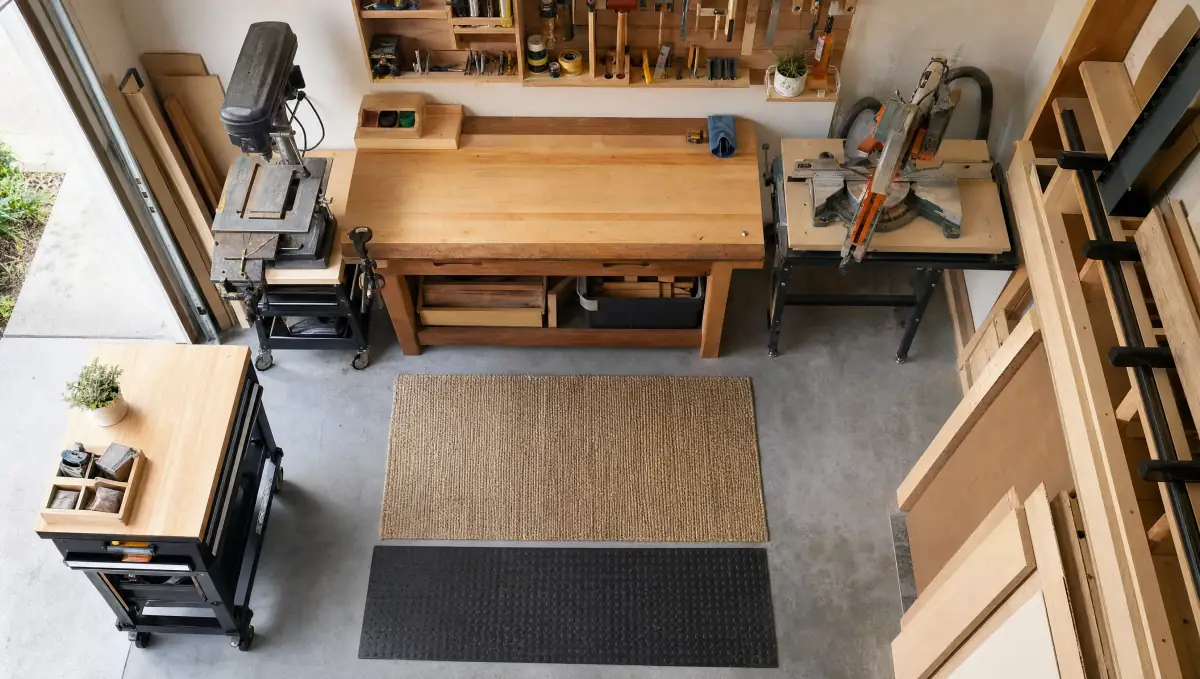
Start with how you will work
A good small shop is not about owning every tool. It is about fitting the tools you actually need into the space you actually have, with safe power, decent light, controlled dust and enough room to handle a full sheet of plywood. Whether you are working in a one-car garage, a shared two-car garage, a basement corner or a backyard shed, the same planning principles apply.
Before buying anything, answer three questions:
- What will you build? Small boxes and crafts need very different tools from cabinets or outdoor furniture.
- Is the space dedicated or shared? If a car still parks in the garage, everything needs to roll or fold away.
- What are your noise and dust limits? Basements and attached garages share air with the house, and neighbors may care about saw noise in the evening.
Layout: plan around the material flow
Lumber typically moves through a shop in a predictable order: storage, rough cutting, milling, joinery, assembly, then finishing. Arranging the space roughly in that order cuts down on carrying boards back and forth.
- Infeed and outfeed space. Saws need clear space in front and behind the blade. Ripping an 8-foot board on a table saw needs roughly 8 feet on each side of the blade along the cutting line. In tight shops, place the saw so the long cutting direction runs toward a garage door or down the longest wall.
- Workbench as the center. Most work happens at the bench, so put it where you have good light and can reach common tools without walking far. A bench that doubles as table saw outfeed support saves a lot of floor space.
- Mobile bases. Putting large tools on locking casters lets you roll them out when needed and tuck them against a wall afterward. This is the single most common strategy for small shops.
- Draw it first. Sketch the room on graph paper, or use cardboard cutouts on the floor, with each tool's footprint and working clearance before you buy.
First tools by budget tier
Tool prices vary by brand, retailer and sale timing, so these tiers describe what to prioritize rather than exact costs. Buying quality used tools can stretch any budget.
| Tier | Core tools | What it lets you build |
|---|---|---|
| Starter (essentials) | Circular saw with a straightedge guide, cordless drill/driver, jigsaw, random orbit sander, combination square, tape measure, 4-6 clamps, safety glasses, hearing protection, dust mask | Crates, shelves, sawhorses, simple workbench, outdoor projects |
| Intermediate (precision) | Miter saw, pocket-hole jig, router (compact or mid-size), more clamps, shop vacuum with a fine filter, impact driver, block plane, chisels | Picture frames, furniture with pocket holes, edge profiles, bookshelves |
| Expanded (stationary) | Table saw (jobsite or cabinet style), dust collector, band saw, drill press, possibly a benchtop planer | Cabinets, ripping your own stock, resawing, repeatable joinery |
A widely shared piece of advice is to build your first workbench before buying stationary tools. A flat, sturdy bench with clamping options makes every hand and power tool more useful. If you are looking for first projects to practice with these tools, see our list of woodworking projects for beginners.
Table saw or track saw?
The table saw is the traditional center of a woodshop, but it takes up a lot of floor space and is responsible for many serious shop injuries. In small spaces, many woodworkers start with a circular saw and a guide rail, or a track saw, for breaking down plywood, and add a table saw later. If you do buy one, look for a riving knife, blade guard and anti-kickback features, and consider flesh-sensing technology if your budget allows.
Dust collection
Dust control is both a cleanliness issue and a health issue. Wood dust is classified as a human carcinogen by the International Agency for Research on Cancer, and fine dust that stays airborne is the hardest to see and the most likely to be inhaled. NIOSH recommends a much lower exposure limit for wood dust than the general limit OSHA applies to nuisance dust, which is a good reason to treat dust control as a priority.
| Approach | Best for | Notes |
|---|---|---|
| Shop vacuum with fine filter | Sanders, routers, circular saws, track saws | Pair with a cyclone separator to protect the filter. High suction, low airflow. |
| Single-stage dust collector | Table saws, planers, jointers | Moves large volumes of chips. Upgrade the bag or filter for finer particles. |
| Ceiling-hung air filtration unit | Fine dust that escapes collection | Supplements collection at the tool; does not replace it. |
| Respirator or well-fitted mask | Everyone, especially when sanding | Personal protection is the last line of defense. |
Capturing dust at the source is the most effective approach. Connect tools to collection whenever you can, and avoid sweeping or blowing dust with compressed air, which puts fine particles back in the air. Dry wood dust can also be combustible, so empty collectors regularly and keep dust away from heaters and other ignition sources.
Electrical and lighting
Power is often the limiting factor in garage workshops. Many garages have only one or two shared 15-amp circuits, which can trip when a saw starts while a dust collector is running.
- Dedicated circuits. Many woodworkers add at least one dedicated 20-amp, 120-volt circuit for large tools, and a separate circuit for dust collection and lights.
- 240-volt tools. Cabinet saws and larger dust collectors often run on 240 volts. Plan for that circuit early if you expect to grow into those tools.
- GFCI protection. The National Electrical Code generally requires ground-fault protection for 125-volt, 15- and 20-amp receptacles in residential garages, and newer editions extend this further. Requirements depend on the code edition your area has adopted.
- Extension cords. Use heavy-gauge cords sized for the tool's amperage and keep runs short. Undersized cords cause voltage drop and heat.
- Lighting. Bright, even LED shop lighting reduces shadows at the bench and saw. Add task lights where you do detailed work.
Have a licensed electrician handle new circuits and panel work, and confirm whether your jurisdiction requires a permit. This is not a place to guess.
Shop safety setup
- Mount a fire extinguisher rated for ordinary combustibles near the exit.
- Store finishes, solvents and fuel in closed containers, away from heat sources.
- Dispose of oily rags properly. Rags with oil-based finishes such as linseed oil can self-heat, so lay them flat to dry outdoors or keep them in a sealed metal container with water.
- Keep a first aid kit within reach and make sure someone knows when you are working alone.
- Keep safety glasses, hearing protection and a respirator on a hook by the door so you grab them every time.
- Keep floors clear of offcuts and cords. Tripping near a running blade is a serious hazard.
- Lock out or unplug tools if children have access to the space.
Storage that works in small spaces
In a small shop, wall space is more valuable than floor space.
- French cleats. A wall of 45-degree cleats lets you hang and rearrange tool holders, cabinets and shelves without new screws in the wall.
- Lumber racks. Store long boards horizontally on wall-mounted arms, and plywood vertically in a narrow rolling cart.
- Offcut bin. Keep a single bin for scraps worth saving and be ruthless about the rest. Offcut piles take over small shops.
- Multi-purpose furniture. A miter saw station with drawers, an assembly table that doubles as outfeed support, or a flip-top cart that holds two benchtop tools all save floor space.
- Overhead. Ceiling racks in a garage work well for seasonal items and long, light stock.
Climate and comfort
Wood moves with humidity, and glue and finishes have temperature ranges on their labels. In unheated garages, store glue and finishes indoors in winter, and allow lumber to acclimate to the shop before milling it. Insulation and a safe heater rated for shop use make the space usable for more of the year. Avoid open-flame heaters in dusty spaces.
Plans and resources for small shops
Shop furniture such as workbenches, mobile tool stands and storage cabinets makes good early projects because they solve your own space problems while building skill. We published a research-based review of Ultimate Small Shop, a guide focused on planning and equipping a home workshop, and of Ted's Woodworking, a project plan collection that includes shop furniture among its plans.
See the Ultimate Small Shop guide
For more guides on projects and tools, browse the woodworking category, or read our how to build a shed guide if you need a dedicated outbuilding for your shop.
Frequently asked questions
How much space do I need for a woodworking shop?
You can do useful work in a single-car garage or a basement corner. The key constraint is clearance for long cuts and full plywood sheets, which mobile bases and a circular saw with a guide rail help solve in small spaces.
What tools should I buy first for a home woodshop?
Start with a circular saw and straightedge guide, cordless drill/driver, jigsaw, random orbit sander, square, tape measure, clamps and safety gear. Add a miter saw, pocket-hole jig and router next, and stationary tools like a table saw later.
Do I need a dust collector in a small shop?
A shop vacuum with a fine filter and a cyclone separator handles dust from sanders and handheld tools well. A dedicated dust collector becomes important once you add a table saw or planer, and a respirator is still recommended for sanding.
What electrical setup does a garage workshop need?
Many woodworkers add dedicated 20-amp circuits for large tools and dust collection, and some add a 240-volt circuit for bigger machines. Garage receptacles generally require GFCI protection under the National Electrical Code. Use a licensed electrician and check local permit rules.
How do I organize tools in a small workshop?
Use wall space first: French cleats, wall-mounted lumber racks and overhead storage. Put large tools on locking casters and build shop furniture that serves two purposes, such as an assembly table that doubles as outfeed support.
Reviews mentioned in this guide
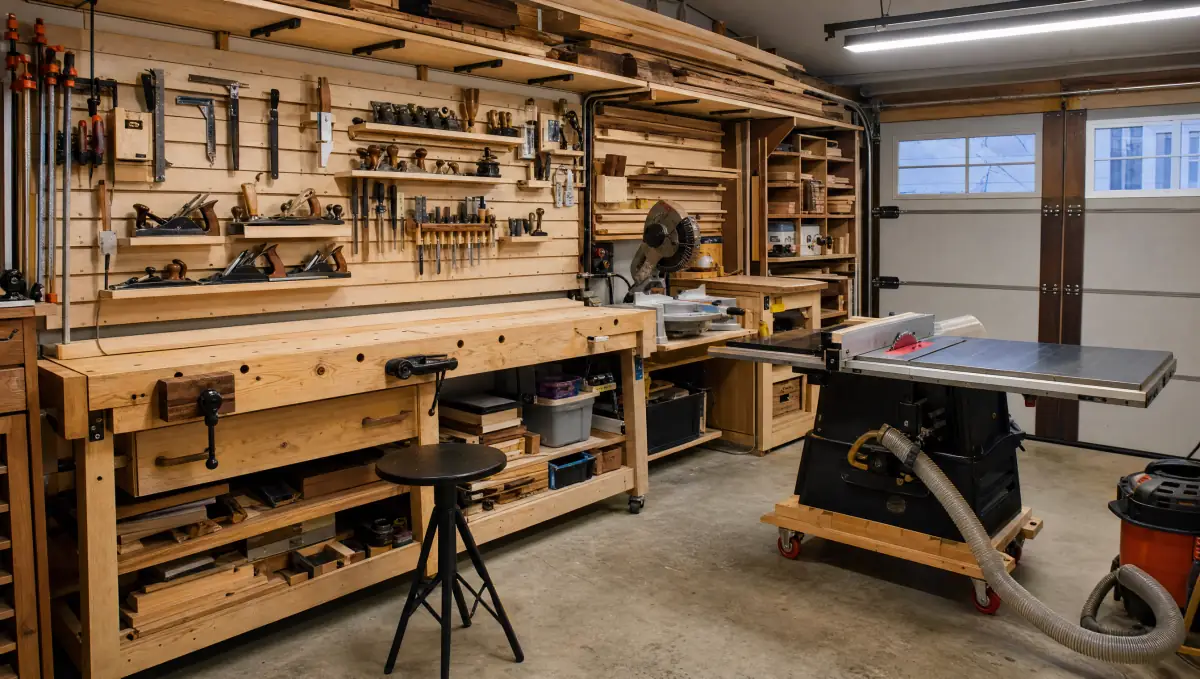
Ultimate Small Shop
A low-cost, narrowly focused shop-planning guide that suits beginners with a small space, backed by a 60-day refund but little independent buyer feedback.
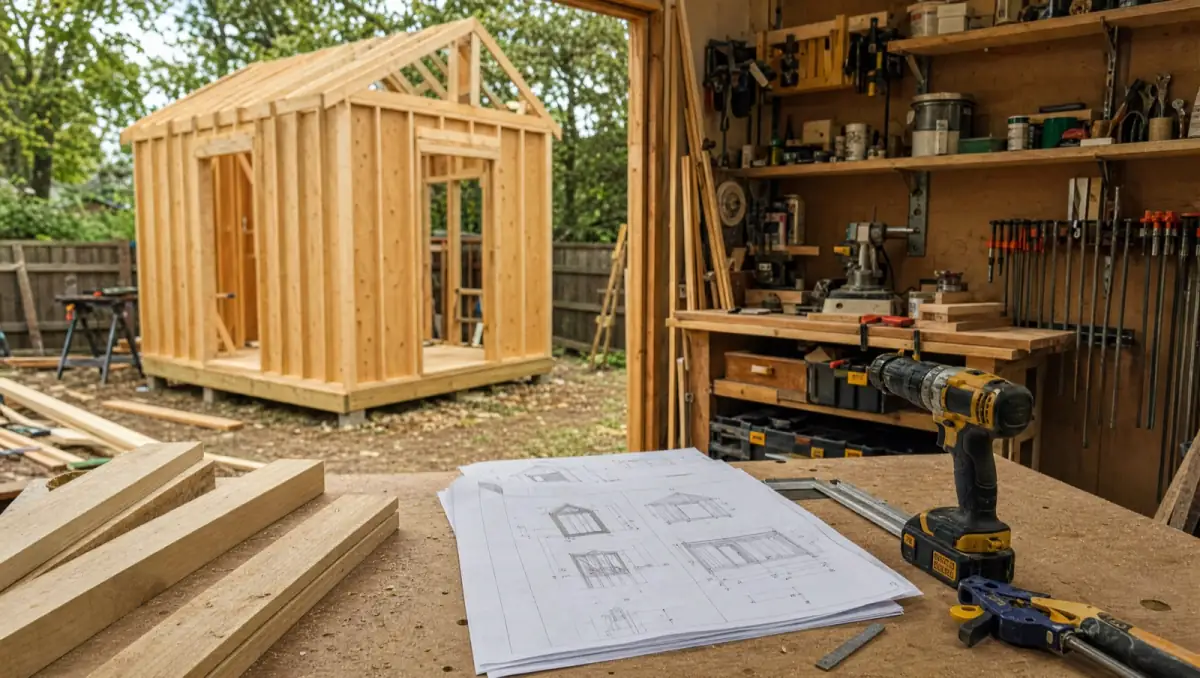
Ted's Woodworking
A cheap, very broad plan library worth trying only if you will check the plans critically within the 60-day refund window.